“And so this is Christmas, and what have you done?” Since Sustainability Consult was set up in 2008, we have made a Christmas donation each year to a project promoting sustainability and working to enhance human development in developing countries. We were very happy to lend our support to Pump Aid in 2008 and Solar Aid in 2009. And very excited to announce the Seaweed Center in Zanzibar, Tanzania as our 2010 Christmas Charity.
This support is not just for Christmas. Right now, we’re providing the funds for a ‘cow car’, a cow and wagon plus feed for the cow so that seaweed can be moved more efficiently from the beach to the production facility and to take some of the physical strain off the workers. But at a recent fundraiser for the Seaweed Center, we announced our commitment to the project and our intention to offer pro-bono media relations and communications support, as well as sustainability advice to the project.
Zanzibar’s economy depends heavily on a well-functioning seaweed sector as 20% of its export revenues come from the export of dried seaweed to the international cosmetics market. The Seaweed Center Zanzibar is helping 450 female seaweed workers in the village of Paje improve their quality of life. Assistance is provided to make the harvesting and drying of seaweed more efficient and added-value products like seaweed soap are being produced.
We believe that the Seaweed Center’s holistic and integrated sustainability approach and its emphasis on women-driven development will help reduce gender inequalities and generate long-term sustainable development in Zanzibar. By giving people the tools to create their own development instead of dependent on aid handouts, the development is more sustainable.
We are grateful to the Masters students at the School of Intellectual Capital Management (ICM) at Chalmers University of Technology in Gothenburg, Sweden for giving us the opportunity to participate in this wonderful project.
We don’t want to be preachy or boring but this blog is where we share our values and experiences and write about the issues shaping the future of our businesses and our society. Catch a glimpse into our lives and find out what’s new in our world...
Sunday, 19 December 2010
Wishing You A Soapy Christmas
Labels:
Christmas charity,
cosmetics,
School of Intellectual Capital Management,
Seaweed Center,
soap,
Zanzibar
Wednesday, 24 November 2010
WWF Gloomy On 2050 Targets
Launched at a conference in Brussels today, WWF’s report ‘Climate Policy Tracker for the European Union’ claims that no single EU Member State is even close to reaching the 2050 target of a 85-90% reduction in greenhouse gas emissions. WWF states that Member States overall will have to triple their efforts to reach this target.
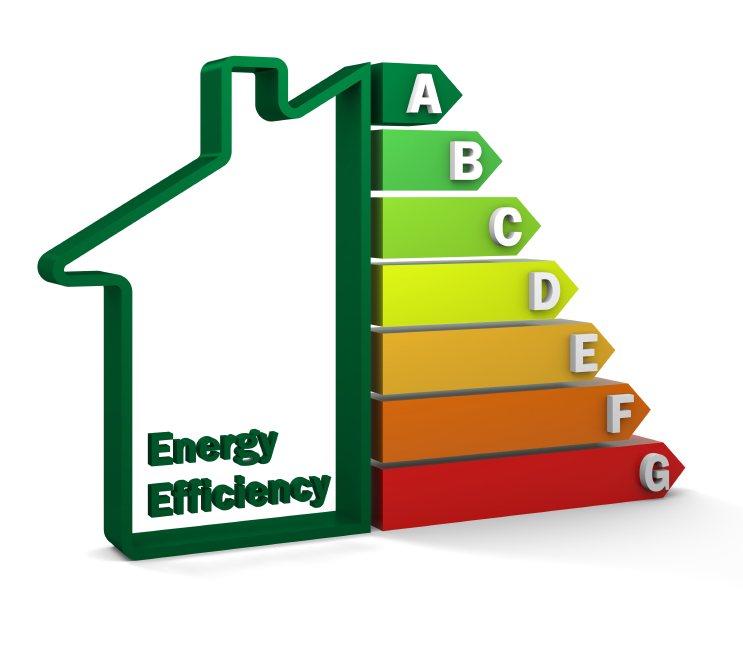
WWF analyses each Member State’s performance in combating climate change against benchmarks such as the use of renewables and energy efficiency in the policy areas of general climate policy, electricity supply, industry, buildings, transport, agriculture and forestry. Member States are ranked on a scale of A to G on their efforts to fight climate change. While the vast majority of countries are to be found languishing in category E, some supposedly high-achievers like Denmark are still only found in category D and others like Romania in group F.
The findings were both praised and criticised by panel members. The European Commission’s Director General (DG) for Climate Action, Jos Delbeke and the DG for Energy, Philip Lowe said that the report would provide a helpful tool for the EU in the upcoming climate negotiation round in Cancun. Belgian Federal Minister for Climate and Energy Paul Magnette, representing the Belgian Presidency of the Council of the EU, on the other hand, clearly expressed his disappointment with the findings, claiming that the report does not reveal anything new. He called for more accurate assessments which would take into account country-specific conditions and urged the inclusion of an analysis of not only the environmental but also the social impacts of climate change.
Head of EU Climate and Energy Policy at WWF’s European Policy Office Jason Anderson welcomed the different views being voiced, stressing that the aim of the report was to “stimulate discussion” to improve Member States’ climate change policy.
Text: Filip Haugland
Image: utahenergy.org
WWF analyses each Member State’s performance in combating climate change against benchmarks such as the use of renewables and energy efficiency in the policy areas of general climate policy, electricity supply, industry, buildings, transport, agriculture and forestry. Member States are ranked on a scale of A to G on their efforts to fight climate change. While the vast majority of countries are to be found languishing in category E, some supposedly high-achievers like Denmark are still only found in category D and others like Romania in group F.
The findings were both praised and criticised by panel members. The European Commission’s Director General (DG) for Climate Action, Jos Delbeke and the DG for Energy, Philip Lowe said that the report would provide a helpful tool for the EU in the upcoming climate negotiation round in Cancun. Belgian Federal Minister for Climate and Energy Paul Magnette, representing the Belgian Presidency of the Council of the EU, on the other hand, clearly expressed his disappointment with the findings, claiming that the report does not reveal anything new. He called for more accurate assessments which would take into account country-specific conditions and urged the inclusion of an analysis of not only the environmental but also the social impacts of climate change.
Head of EU Climate and Energy Policy at WWF’s European Policy Office Jason Anderson welcomed the different views being voiced, stressing that the aim of the report was to “stimulate discussion” to improve Member States’ climate change policy.
Text: Filip Haugland
Image: utahenergy.org
Labels:
2050 emmissions targets,
Climate Policy Tracker for the European Union,
EU Climate and Energy Policy,
greenhouse gas emissions,
WWF
Wednesday, 10 November 2010
Greenpeace Keeps Pressure On
Environmental NGOs have increasingly seen targeting manufacturers and retailers directly as a more effective and faster way of driving change than regulation, or than regulation alone. The latest edition of Greenpeace’s ‘Guide to Greener Electronics’, highlights the quite significant gap performance between the world’s top 18 electronic manufacturers. Updated several times a year since 2006, the Greenpeace guide ranks the achievements of electronic manufacturers in eliminating hazardous substances from their products, as well as in take back and recycling and reducing the climate impact of their products and operations.
The latest edition reconfirms Finnish mobile technology manufacturer Nokia as the world’s ‘greenest’ electronic manufacturer, scoring 7.5 out of a possible 10. Nokia ranks top in 10 of the 16 categories, and has done so for the last two years. For the third time in a row, Japanese-Swedish mobile technology manufacturer Sony-Ericsson is hot on Nokia’s heels with 6.9. While Korean manufacturer Samsung enjoys the biggest improvement, jumping from position 13 to five, US giant Apple has had the biggest fall, slipping from fifth to ninth place. As users of Apple products, we will be monitoring this carefully.
At the bottom end of the spectrum, Japanese video game manufacturer Nintendo continues to hold the unflattering last place with a score of 1.8, a position it has held ever since first being listed in December 2007. Microsoft too is not scoring that highly with 1.9, sliding from 16th to 17th place as a result of troubles surrounding its commitment to phase out brominated flame retardants and PVC by end-2010.
Used by a substantial and ever-increasing proportion of the world’s population on a daily basis, the environmental impact of electronic products cannot be underestimated. As our throwaway society becomes ever more hungry for the latest gadget, the greening of electronics is an important step in addressing these issues. We can only repeat Greenpeace’s question and ask “Who will be first to go [100%] green?”
Text: Filip Haugland/Kathryn Sheridan
The latest edition reconfirms Finnish mobile technology manufacturer Nokia as the world’s ‘greenest’ electronic manufacturer, scoring 7.5 out of a possible 10. Nokia ranks top in 10 of the 16 categories, and has done so for the last two years. For the third time in a row, Japanese-Swedish mobile technology manufacturer Sony-Ericsson is hot on Nokia’s heels with 6.9. While Korean manufacturer Samsung enjoys the biggest improvement, jumping from position 13 to five, US giant Apple has had the biggest fall, slipping from fifth to ninth place. As users of Apple products, we will be monitoring this carefully.
At the bottom end of the spectrum, Japanese video game manufacturer Nintendo continues to hold the unflattering last place with a score of 1.8, a position it has held ever since first being listed in December 2007. Microsoft too is not scoring that highly with 1.9, sliding from 16th to 17th place as a result of troubles surrounding its commitment to phase out brominated flame retardants and PVC by end-2010.
Used by a substantial and ever-increasing proportion of the world’s population on a daily basis, the environmental impact of electronic products cannot be underestimated. As our throwaway society becomes ever more hungry for the latest gadget, the greening of electronics is an important step in addressing these issues. We can only repeat Greenpeace’s question and ask “Who will be first to go [100%] green?”
Text: Filip Haugland/Kathryn Sheridan
Friday, 29 October 2010
Help Us Choose Our New Logo
To celebrate our two-year anniversary, we’re rebranding. If you want to have your say on our new logo, go to http://sustainabilityconsult.posterous.com/help-choose-our-new-logo.
Thanks!
Kathryn
Thanks!
Kathryn
Labels:
anniversary,
new logo,
rebranding,
Sustainability Consult
Thursday, 28 October 2010
The Myths Of Nuclear
Is nuclear power really an unlimited, cheap and safe energy source as often claimed by policymakers and the pro-nuclear lobby? In a new book ‘Myths of Nuclear Power – A Guide’, the Heinrich Böll Stiftung has attempted to shed some light on the debate and to kill what they call the “myths” used to justify the ongoing use of nuclear power.
Despite recent claims of a “renaissance of nuclear power”, speakers at the book launch event in the European Parliament yesterday stressed that the number of nuclear power plants in use worldwide has steadily decreased since 2002. Any reconstruction work taking place on existing plants since January 2008 has been mainly in China which has done 21 refits, Russia with six and Korea with three, and not in Europe and other Western countries.
Speakers at the launch also contested the assumption that the second phase of third-generation nuclear power, otherwise known as ‘3G+’, would be cheaper than earlier generations. They stressed that during 50 years of nuclear power energy production, nuclear power costs have not decreased. In France, where 58 reactors have been constructed in the last 20 years, construction costs have tripled and energy capacity declined compared to the rest of the world, they claimed.
Speakers also presented arguments against 3G+ programmes as a guarantor of secure nuclear power-based energy generation, saying that nuclear power generation is especially unsafe in emerging countries. For example, they said, only six of the 30 recently reconstructed power plants in China, Russia and Korea conform to EU and US safety requirements.
Clearly this is a controversial topic. It can be argued that nuclear power is neither unlimited nor very cheap or safe. However, large nuclear power plants are still generating a considerably greater quantity of energy than large renewable plants, agreed the speakers.
However, speakers also claimed that if we see nuclear power as a bridging technology and not as an alternative to the full-scale use of renewables, we open the door for nuclear to keep putting pressure on renewables in a renewables market which is already under economic pressure.
Text: Filip Haugland
Image: kyodonews.jp (Fukushima nuclear power plant)
Despite recent claims of a “renaissance of nuclear power”, speakers at the book launch event in the European Parliament yesterday stressed that the number of nuclear power plants in use worldwide has steadily decreased since 2002. Any reconstruction work taking place on existing plants since January 2008 has been mainly in China which has done 21 refits, Russia with six and Korea with three, and not in Europe and other Western countries.
Speakers at the launch also contested the assumption that the second phase of third-generation nuclear power, otherwise known as ‘3G+’, would be cheaper than earlier generations. They stressed that during 50 years of nuclear power energy production, nuclear power costs have not decreased. In France, where 58 reactors have been constructed in the last 20 years, construction costs have tripled and energy capacity declined compared to the rest of the world, they claimed.
Speakers also presented arguments against 3G+ programmes as a guarantor of secure nuclear power-based energy generation, saying that nuclear power generation is especially unsafe in emerging countries. For example, they said, only six of the 30 recently reconstructed power plants in China, Russia and Korea conform to EU and US safety requirements.
Clearly this is a controversial topic. It can be argued that nuclear power is neither unlimited nor very cheap or safe. However, large nuclear power plants are still generating a considerably greater quantity of energy than large renewable plants, agreed the speakers.
However, speakers also claimed that if we see nuclear power as a bridging technology and not as an alternative to the full-scale use of renewables, we open the door for nuclear to keep putting pressure on renewables in a renewables market which is already under economic pressure.
Text: Filip Haugland
Image: kyodonews.jp (Fukushima nuclear power plant)
Labels:
3G+ programmes,
European Parliament,
Myths of Nuclear Power,
Nuclear power,
renewables,
safety requirements
Tuesday, 12 October 2010
Is It Innovation vs Sustainability?
We have been working on innovation policy for several years and innovation is certainly the Brussels buzzword this year, particularly since the appointment of the new Research & Innovation Commissioner and the long-awaited launch last week of the Commission Innovation Union strategy, a strategy that was largely welcomed by industry and other stakeholders.
At the Knowledge4Innovation 2nd Innovation Summit in Brussels today, the strategy was called “ambitious”, albeit with some cynicism, and the speed of change planned was described as “breathtaking”. We also heard from the European Commission and Council that innovation should be considered in public procurement. Public procurement represents 17% of EU GDP according to the speakers. And this leaves me wondering how this ‘innovation-friendly public procurement’ will impact the ongoing discussion on green public procurement.
Environmentally-sound purchasing and innovation-friendly procuring are not necessarily the same thing. Or are they? If the Innovation Union strategy is going to be the cornerstone of the Europe 2020 strategy as promised, then the focus on smart and green growth which guides the Europe 2020 should also carry across into the public procurement part.
Are there innovative technologies which are not environmentally-sound? Presumably. Or there could be more sustainable technologies or products which are not supported as they are seen as being less innovative. How to reconcile sustainability and innovation? It will be interesting to see how this debate develops. It’s early days and the Council and Parliament haven’t had the chance to have their say on the proposal yet. The whole Innovation Union strategy will be discussed in the first thematic European Council on Innovation in December. So we’ll be watching closely to see how this develops.
Image: knowledge4innovation.eu
At the Knowledge4Innovation 2nd Innovation Summit in Brussels today, the strategy was called “ambitious”, albeit with some cynicism, and the speed of change planned was described as “breathtaking”. We also heard from the European Commission and Council that innovation should be considered in public procurement. Public procurement represents 17% of EU GDP according to the speakers. And this leaves me wondering how this ‘innovation-friendly public procurement’ will impact the ongoing discussion on green public procurement.
Environmentally-sound purchasing and innovation-friendly procuring are not necessarily the same thing. Or are they? If the Innovation Union strategy is going to be the cornerstone of the Europe 2020 strategy as promised, then the focus on smart and green growth which guides the Europe 2020 should also carry across into the public procurement part.
Are there innovative technologies which are not environmentally-sound? Presumably. Or there could be more sustainable technologies or products which are not supported as they are seen as being less innovative. How to reconcile sustainability and innovation? It will be interesting to see how this debate develops. It’s early days and the Council and Parliament haven’t had the chance to have their say on the proposal yet. The whole Innovation Union strategy will be discussed in the first thematic European Council on Innovation in December. So we’ll be watching closely to see how this develops.
Image: knowledge4innovation.eu
Labels:
Commission Innovation Union strategy,
Europe 2020,
Innovation Union,
Knowledge4Innovation 2nd Innovation Summit,
sustainability
Thursday, 29 July 2010
Time Ticking On
The Test Drive for journalists of the Green Post electric vehicle was just some of the summer fun we’ve been having at Sustainability Consult. But it wasn’t all about fun and games, there was a serious message to promote about greening the fleet of postal vehicles in Europe. You can see the YouTube video of our exploits outside the European Parliament at http://www.youtube.com/watch?v=FMY7_0pyMwI.
In many ways it is hard to believe that we’re already over half-way through 2010. The summer break is fast approaching and we’re tidying things up to be able to escape for a few weeks to relax and discover new places. 2010 has already been quite a year and we consider ourselves very fortunate to be working in such an interesting environment in Brussels. We’ve seen some changes already this year. Ellie Haag went to work at the European Association of Business in Society (EABIS) where she’s doing very well and keeping us posted on her activities promoting CSR with business schools and the international business community. Then fresh from business school herself, Faye Shanley took over from Ellie on a part-time basis.
We’ve been happy to welcome a number of new clients on-board and after nearly two years in business, expansion is very much on the cards. We’ve tested working with the members of the Network and it’s gone well so we’re now formalising the relationship and bringing the Network on-board in a much more concrete way. We may even stop talking about a ‘Network’. After all, these consultants are our team.
There are so many ideas about next steps and expansion but I’ll be letting it all tick over in the back of my mind during the holidays and we’ll see what comes out in September.
Wishing you all a wonderful summer,
Kathryn
In many ways it is hard to believe that we’re already over half-way through 2010. The summer break is fast approaching and we’re tidying things up to be able to escape for a few weeks to relax and discover new places. 2010 has already been quite a year and we consider ourselves very fortunate to be working in such an interesting environment in Brussels. We’ve seen some changes already this year. Ellie Haag went to work at the European Association of Business in Society (EABIS) where she’s doing very well and keeping us posted on her activities promoting CSR with business schools and the international business community. Then fresh from business school herself, Faye Shanley took over from Ellie on a part-time basis.
We’ve been happy to welcome a number of new clients on-board and after nearly two years in business, expansion is very much on the cards. We’ve tested working with the members of the Network and it’s gone well so we’re now formalising the relationship and bringing the Network on-board in a much more concrete way. We may even stop talking about a ‘Network’. After all, these consultants are our team.
There are so many ideas about next steps and expansion but I’ll be letting it all tick over in the back of my mind during the holidays and we’ll see what comes out in September.
Wishing you all a wonderful summer,
Kathryn
Subscribe to:
Posts (Atom)