 The Sustainability of Palm Oil Production debate held by The Parliament Magazine in association with the Malaysian Palm Oil Council at the European Parliament on 14 June attracted a full house of MEPs, NGOs, policymakers, researchers, journalists and industry representatives to the Parliament Members’ Salon, where participating speakers set out widely divergent views on the issues surrounding palm oil.
Thoughtshower, the Sustainability Consult Blog
Wednesday, 15 June 2011
Food vs Fuel: How Sustainable is Palm Oil?
The Sustainability of Palm Oil Production debate held by The Parliament Magazine in association with the Malaysian Palm Oil Council at the European Parliament on 14 June attracted a full house of MEPs, NGOs, policymakers, researchers, journalists and industry representatives to the Parliament Members’ Salon, where participating speakers set out widely divergent views on the issues surrounding palm oil.
Wednesday, 8 June 2011
No more cheap energy, says Commission
 |
| Emmanuel Guerin, Director IDDRI Climate |
Bringing together the great and the good from academia, NGOs, policymaking, industry and the media at the French Permanent Representation to the EU, the presentation of the new Climate Strategies/IDDRI report on ‘The Need for a Strengthened Energy and Climate Strategy – for an energy-efficient, competitive and low-carbon Europe’ preceded a lively debate on what is needed to significantly reduce greenhouse gas emissions in the EU.
Monday, 23 May 2011
Sustainability Consult Launches New Website

The Sustainability Consult Team is delighted to announce the launch of its new website, which coincides with our advertisement in the European Voice newspaper and the European Commission's 2011 Green Week. We invite you to take a look around and send us your feedback.
Wednesday, 12 January 2011
We Must Recycle The Rare

First published in CIWM Journal January 2011
With China moving to reduce its exports of rare earth elements, there is no longer just an environmental incentive but also an economic driver to improve waste management, in particular the reduction, re-use and recycling of rare earth elements.
In the last few years, China has adopted a more protectionist stance in the provision of rare earths, such as antimony, graphite and magnesium and is expected to introduce a full export ban by 2015. This position is starting to impact electronics producers worldwide with major German technology manufacturers, in October, reporting their first shortage of rare metals used for electronics like mobile phones, according to a recent article in Spiegel Online.
China puts this brake on exports down to its own dwindling stocks which need, it says, to be conserved for environmental reasons. However, countries affected by reduced imports believe that China is taking advantage of Europe’s own shortage in rare earth elements to push companies to locate their production and invest in China.
Currently, 95 percent of the production of rare earths is located in China so, when push comes to shove, there is little that Europe can really do.
Surely China’s blockade on shipments of rare earths should encourage other countries to put their own mines into production? Perhaps, but the prospects to do so are limited, at least in the short-term. Mines require a lot of investment and can take years to come online. Permitting can also be an issue. Even where there are big deposits, for example in Canada, Greenland, India or Russia, it could take up to five years to develop mines that could compete with China’s production.
EU policies are needed, which are aimed at encouraging citizens to further embrace the three Rs of ”reduce, re-use and recycle” for high-tech products to face up to China’s tightening grip on the rare earths that European industry needs. The European Commission’s 2008 Raw Materials Initiative may be a step in the right direction.
The Ad-hoc Working Group on Defining Critical Raw Materials published its report Critical Raw Materials for the EU this year, in which it identified recycling of raw materials or raw material-containing products and improvements in the overall efficiency of the management of critical raw materials as two of the most crucial steps needed if the EU is to tackle its shortage of the rarer raw materials.
Unveiling its 2020 Energy Strategy in November, the Commission made clear that it will apply assertive tactics to guarantee continuous access to scarce natural resources. The rare earths are used not only for electronic equipment but also in batteries and wind turbines. The Commission’s statement caused some concern among national diplomats as it sent a clear message to China to back off on its rare earths export restrictions.
While from a trade policy perspective this is understandable, for the long-term environmental and economic wellbeing of the EU, we should not overlook our resource efficiency and waste legislation.
Other News From The EC
In more general policy terms, the Commission last year recommended establishing an EU agency responsible for enforcing compliance with EU waste legislation. Under the Commission’s proposal, this agency would have extensive powers to review national enforcement systems and undertake inspections of waste facilities. More recently the Commission has started preparing a strategy to ensure compliance with EU waste legislation. Presented as part of the Commission’s 2011 work programme, the strategy aims to ensure compliance through closer monitoring of member states’ implementation progress and a bigger role for national judiciaries in enforcing compliance.
The next move was for member states to transpose the 2008 EU Directive on the Protection of the Environment through criminal law into national law by the end of last year. The Directive outlines a number of environmental offences that must now be considered criminal offences, even if they were committed intentionally or as a result of negligent behaviour.
EU efforts are also being made to better manage specific waste types, such as nuclear fuel and other radioactive waste. A process to ensure safer storage of the 7,000m3 of radioactive waste being generated within the Union each year has been initiated. By moving it from storage sites near the ground to deep underground repositories, the risk posed by fires, accidents and earthquakes will be reduced. While countries such as Finland, France and Sweden have already launched national plans to have such repositories in place before 2025, others have not done so.
On 3 November 2010, the European Commission presented a number of common EU safety standards for the disposal of nuclear power plant fuel, as well as medicine and research radioactive waste. The Proposal for Council Directive on the Management of Spent Fuel and Radioactive Waste requires EU members to present national programmes on how, when and where they handle their nuclear waste and when they will fully implement the International Atomic Energy Agency’s safety standards. Compliance with the safety standards would be assured by an independent body, which would also be responsible for granting licences for the construction and management of the proposed repositories.
The draft Directive allows for co-operation between EU member countries in managing their waste but forbids any export of radioactive waste to outside the EU. It also states that EU citizens would have to be informed and consulted prior to the construction of any proposed radioactive waste storage sites.
Not only radioactive waste management, but also food waste management within the EU has also been on the political agenda recently. In a joint declaration on 28 October, academics and NGOs urged the European Commission to propose a food waste directive before 2015 and to halve the annual food waste from 50 percent to 25 percent of all purchased food by 2025.
Given that food waste today accounts for a quarter of the world’s total freshwater consumption and that each tonne of food waste generates 4.2 tonnes of CO2, hardly a positive carbon balance, the issue of food waste needs to be resolved. The declaration urges the United Nations to make food waste reduction a new Millennium Development Goal and will continue to lobby for a Global Partnership Against Food Waste to be set up.
With this backdrop it seems likely that the EU legislative waste framework will only get more complicated, but also that the mantra of ”reduce, re-use, recycle” is ever more important today, particularly if we are to reduce the Union’s dependence on Chinese rare raw materials. CIW
Kathryn Sheridan is the founder of Sustainability Consult, an environmental communications and issues management network. For more information visit www.sustainabilityconsult.com
Sunday, 19 December 2010
Wishing You A Soapy Christmas

This support is not just for Christmas. Right now, we’re providing the funds for a ‘cow car’, a cow and wagon plus feed for the cow so that seaweed can be moved more efficiently from the beach to the production facility and to take some of the physical strain off the workers. But at a recent fundraiser for the Seaweed Center, we announced our commitment to the project and our intention to offer pro-bono media relations and communications support, as well as sustainability advice to the project.
Zanzibar’s economy depends heavily on a well-functioning seaweed sector as 20% of its export revenues come from the export of dried seaweed to the international cosmetics market. The Seaweed Center Zanzibar is helping 450 female seaweed workers in the village of Paje improve their quality of life. Assistance is provided to make the harvesting and drying of seaweed more efficient and added-value products like seaweed soap are being produced.
We believe that the Seaweed Center’s holistic and integrated sustainability approach and its emphasis on women-driven development will help reduce gender inequalities and generate long-term sustainable development in Zanzibar. By giving people the tools to create their own development instead of dependent on aid handouts, the development is more sustainable.
We are grateful to the Masters students at the School of Intellectual Capital Management (ICM) at Chalmers University of Technology in Gothenburg, Sweden for giving us the opportunity to participate in this wonderful project.
Wednesday, 24 November 2010
WWF Gloomy On 2050 Targets
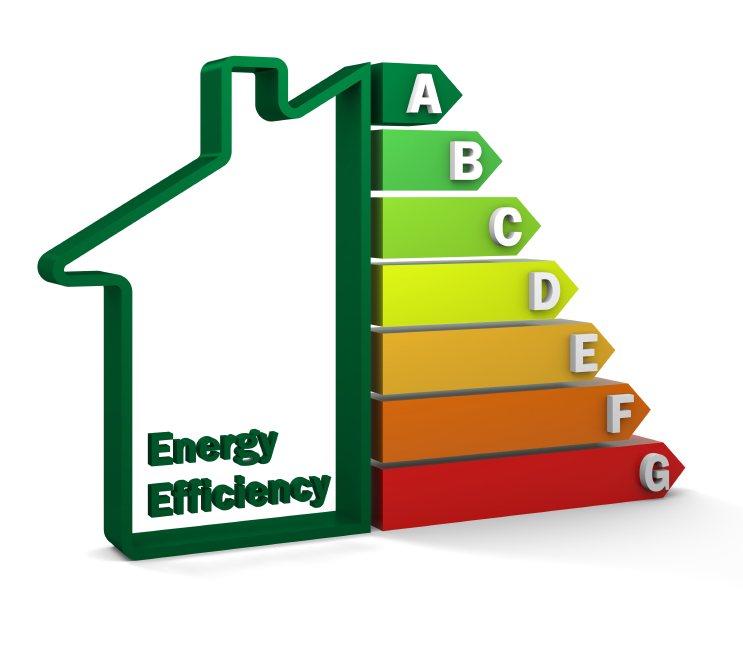
WWF analyses each Member State’s performance in combating climate change against benchmarks such as the use of renewables and energy efficiency in the policy areas of general climate policy, electricity supply, industry, buildings, transport, agriculture and forestry. Member States are ranked on a scale of A to G on their efforts to fight climate change. While the vast majority of countries are to be found languishing in category E, some supposedly high-achievers like Denmark are still only found in category D and others like Romania in group F.
The findings were both praised and criticised by panel members. The European Commission’s Director General (DG) for Climate Action, Jos Delbeke and the DG for Energy, Philip Lowe said that the report would provide a helpful tool for the EU in the upcoming climate negotiation round in Cancun. Belgian Federal Minister for Climate and Energy Paul Magnette, representing the Belgian Presidency of the Council of the EU, on the other hand, clearly expressed his disappointment with the findings, claiming that the report does not reveal anything new. He called for more accurate assessments which would take into account country-specific conditions and urged the inclusion of an analysis of not only the environmental but also the social impacts of climate change.
Head of EU Climate and Energy Policy at WWF’s European Policy Office Jason Anderson welcomed the different views being voiced, stressing that the aim of the report was to “stimulate discussion” to improve Member States’ climate change policy.
Text: Filip Haugland
Image: utahenergy.org
Wednesday, 10 November 2010
Greenpeace Keeps Pressure On

The latest edition reconfirms Finnish mobile technology manufacturer Nokia as the world’s ‘greenest’ electronic manufacturer, scoring 7.5 out of a possible 10. Nokia ranks top in 10 of the 16 categories, and has done so for the last two years. For the third time in a row, Japanese-Swedish mobile technology manufacturer Sony-Ericsson is hot on Nokia’s heels with 6.9. While Korean manufacturer Samsung enjoys the biggest improvement, jumping from position 13 to five, US giant Apple has had the biggest fall, slipping from fifth to ninth place. As users of Apple products, we will be monitoring this carefully.
At the bottom end of the spectrum, Japanese video game manufacturer Nintendo continues to hold the unflattering last place with a score of 1.8, a position it has held ever since first being listed in December 2007. Microsoft too is not scoring that highly with 1.9, sliding from 16th to 17th place as a result of troubles surrounding its commitment to phase out brominated flame retardants and PVC by end-2010.
Used by a substantial and ever-increasing proportion of the world’s population on a daily basis, the environmental impact of electronic products cannot be underestimated. As our throwaway society becomes ever more hungry for the latest gadget, the greening of electronics is an important step in addressing these issues. We can only repeat Greenpeace’s question and ask “Who will be first to go [100%] green?”
Text: Filip Haugland/Kathryn Sheridan
Subscribe to:
Posts (Atom)